Hair removal is sold as a course of sessions, and each session is meant to happen at the interval set by the centre’s treatment protocol. If customers come back too late, or stop after a few visits, they are less likely to be happy with the course and the centre is left with sessions it still owes. The fix is simple: book the next session at the planned interval before the customer leaves, send a WhatsApp reminder before the date, and follow up anyone who drifts away.
Why intervals slip in hair removal courses
- The next visit is weeks away. It is easy for a customer to forget a date that is far in the future.
- Customers book “when they remember”. Without a fixed date, visits drift later and later.
- Busy weeks push sessions back. Festive seasons and holidays make it easy to skip one.
- Staff do not know who is overdue. Without a list, nobody notices that a customer missed her planned session.
- Courses go unfinished. Sessions that are paid for but not done remain a service the centre owes.
The biggest risk in a multi-session course is customers booking only when they remember, because by then the best time has often passed. Booking the next session at the counter works better than any reminder sent afterwards.
William Tang, Founder, MyBMS Pro
How to keep every session on schedule
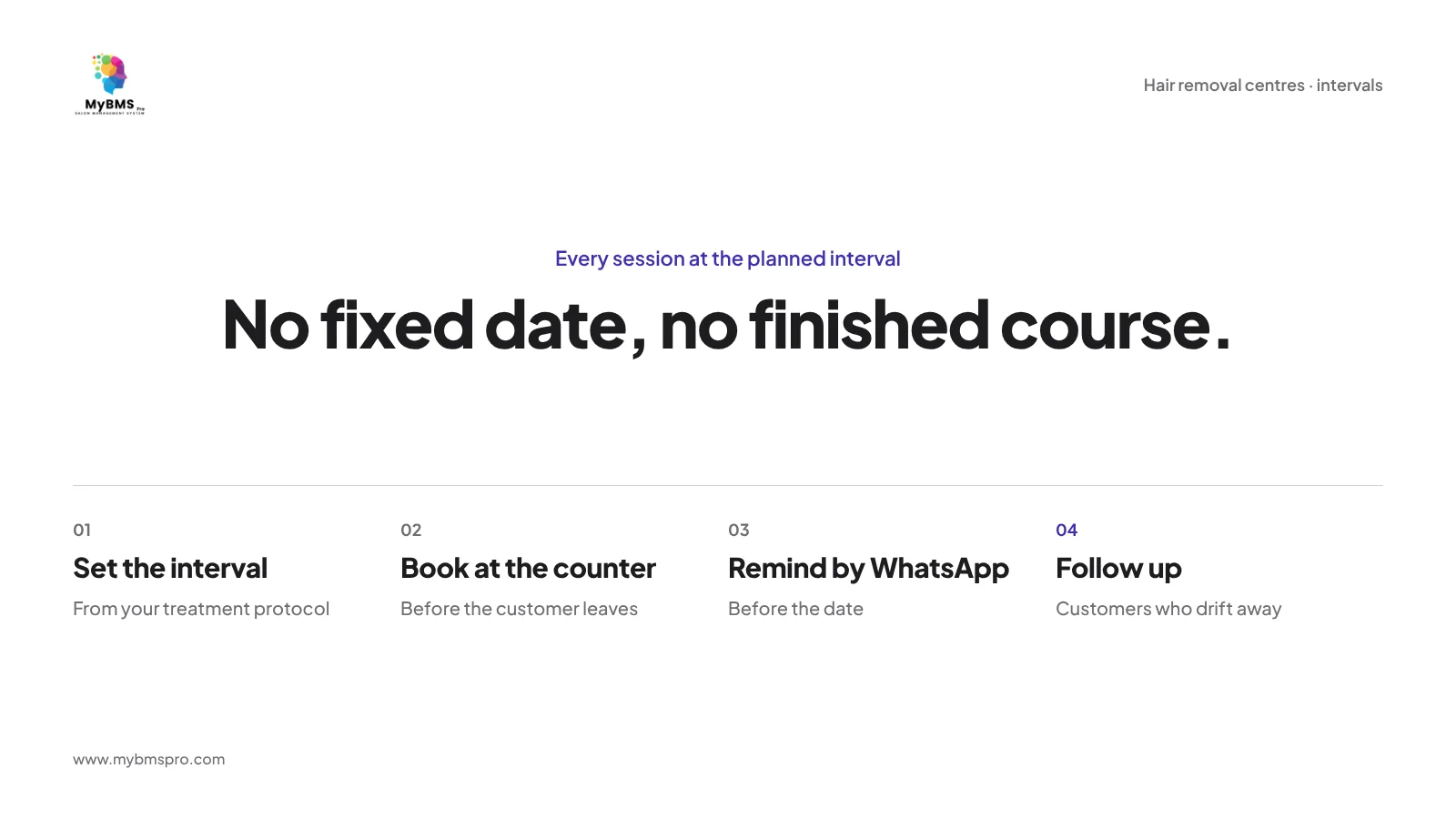
- Set the interval for each treatment. Use the interval in your own treatment protocol, so every staff member plans the same way.
- Book the next session at the counter. Plan it at that interval while the customer is still there.
- Remind by WhatsApp before the date. A short reminder reduces no-shows and late visits. See more in reduce salon no-shows with WhatsApp.
- Track sessions left in the course. Every visit is deducted from the course, so the front desk always knows how many remain. See salon package tracking.
- Follow up customers who drift away. Customers who have not visited for 90 days are flagged, so the centre can invite them back to finish their course.
The same approach for aesthetic clinics is described in aesthetic clinic follow-up scheduling.
How MyBMS Pro keeps hair removal courses on time
MyBMS Pro is an AI-driven, next-generation SaaS management hub specifically designed for multi-branch beauty salons. For hair removal centres, these features work together:

- Automatic interval scheduling. The next session is planned at the treatment’s standard interval.
- WhatsApp reminders and online booking. Reminders are sent automatically by WhatsApp, and customers can book online.
- Course and package tracking. Remaining sessions, history and outstanding balance for every customer.
- AI dormant customer alert. Customers who have not visited for more than 90 days are flagged as dormant.
MyBMS Pro is a web-based system used in the browser.
FAQ
Why does the interval between hair removal sessions matter?
Each course is planned around sessions at a set interval. Keeping to the interval set by your treatment protocol helps customers complete the course as planned.
How do I remind customers about their next hair removal session?
Book the next session before the customer leaves and send a WhatsApp reminder before the date.
What should I do when hair removal customers stop coming?
Track the sessions left in each course and follow up customers who have not visited for 90 days, inviting them back to finish.
Is there a MyBMS Pro mobile app?
No. MyBMS Pro is a web-based system used in the browser.
See it with your own treatments
Want every hair removal session booked on time? Book a free demo of MyBMS Pro and see interval scheduling, WhatsApp reminders and course tracking working together.
See how MyBMS Pro runs bookings, POS, memberships and staff commission in one system — built for salons, spas, clinics and car grooming businesses in Malaysia.
Written by
William Tang · Founder & CEO, BMS Solution Sdn. Bhd.
William Tang is the founder of BMS Solution Sdn. Bhd., the Malaysian company behind MyBMS Pro. He works hands-on with salons, spas, clinics and car-grooming businesses across Malaysia, helping them move bookings, POS, memberships and staff management onto one cloud platform.